How to choose an encrypted USB drive from Kingston for your needs
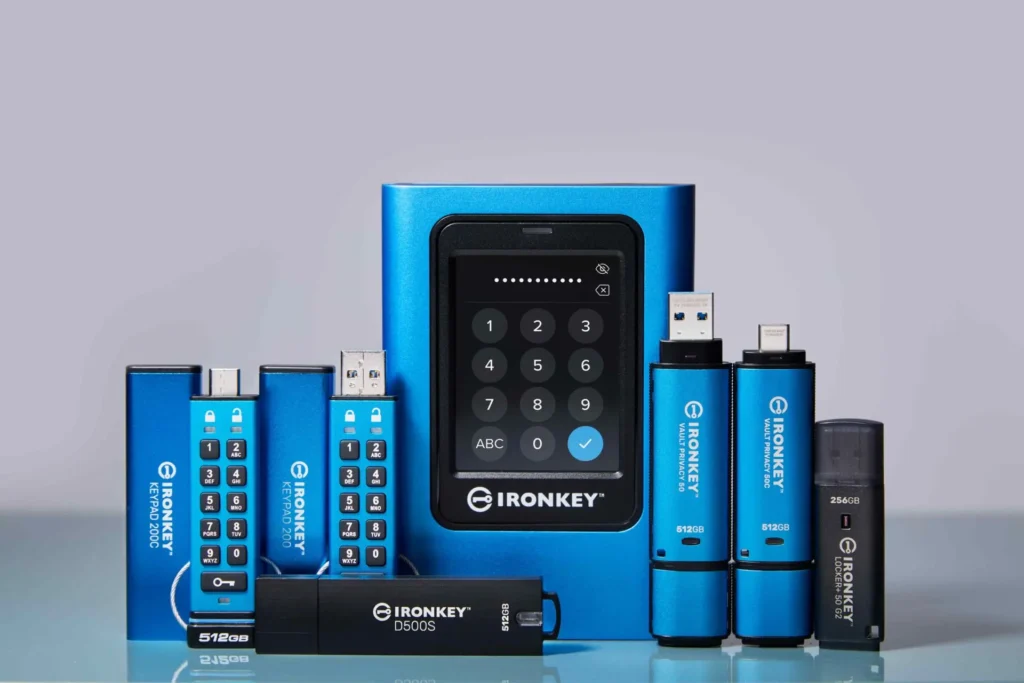
Kingston is offering guidance on what to look for in an encrypted drive, pointing out that portability, while convenient for carrying financial documents, backups, or personal files, also raises the risk of a drive being lost, stolen, or plugged into an untrusted computer, making encryption an important safeguard against sensitive data ending up in the wrong hands.
The first is choosing a manufacturer with a proven track record in secure storage, ideally one whose products have gone through rigorous testing, including independent penetration testing, rather than relying on price or generic “encryption” marketing alone.
The second is always-on, hardware-based encryption. Unlike software encryption, which can be vulnerable to malware and other software-level attacks, hardware-encrypted drives use a dedicated built-in secure microprocessor, automatically encrypting files on save and only decrypting them after authentication. Kingston points to industry-standard XTS-AES 256-bit hardware encryption as a way of keeping encryption keys protected within the device itself, with always-on encryption preventing users from disabling or bypassing protection altogether.
Third is recognized security certifications, particularly important for organizations handling sensitive information. Kingston highlights standards like NIST FIPS 140-3, a US government encryption standard requiring independent testing, and TAA compliance, which matters for US federal and defense procurement by indicating a trusted supply chain. These certifications offer added assurance that a product’s security controls have gone through defined evaluation, especially relevant for government bodies, regulated industries, and organizations handling sensitive data.
The fourth factor covers additional protection features beyond encryption itself, such as brute-force attack protection that erases data after repeated failed password attempts, protection against BadUSB firmware tampering, multi-password setups for both administrator and user access, and dual read-only modes that prevent data from being altered when connected to untrusted systems.
Kingston frames the right choice as depending heavily on use case, noting that a student’s needs look very different from a healthcare organization’s or a business managing offline backups. To that end, the company points to its IronKey portfolio, built on over two decades of experience in hardware-encrypted storage, as covering a range of scenarios.
For everyday users, students, and families, the IronKey Locker+ 50 G2 USB Flash Drive offers straightforward XTS-AES 256-bit hardware encryption with a multi-password option and onboard software requiring no installation, aimed at protecting personal files like tax records while moving between home, school, and work computers. Freelancers and remote workers handling client deliverables and financial records across devices are pointed toward the IronKey Vault Privacy 50 Series, which combines hardware encryption with Admin, User, and One-Time Recovery password options to help restore access if a password is forgotten.
Professionals working with specialized equipment, such as medical, industrial, or security systems, are directed to the IronKey Keypad 200 Series, which is FIPS 140-3 Level 3 validated and uses an alphanumeric keypad for PIN-based access that works independently of any OS or software, along with tamper-resistant protection. For small and medium-sized businesses managing large volumes of data, the IronKey Vault Privacy 80 External SSD, a triple Platinum winner at the ASTORS Homeland Security Awards, offers a touchscreen interface and capacities up to 8TB for high-capacity business backups.
For regulated industries like finance, healthcare, legal, or government that need to meet strict data privacy and supply-chain requirements, Kingston points to the IronKey D500S USB Flash Drive, which is FIPS 140-3 Level 3 validated, XTS-AES 256-bit hardware-encrypted, TAA-compliant, and built to MIL-STD-810F military standards, with a rugged zinc casing, epoxy-filled construction, and automated crypto-erase protections designed to reduce the risk of both physical and digital unauthorized access.