How a Warehouse Management System Transforms Modern Supply Chain Operations
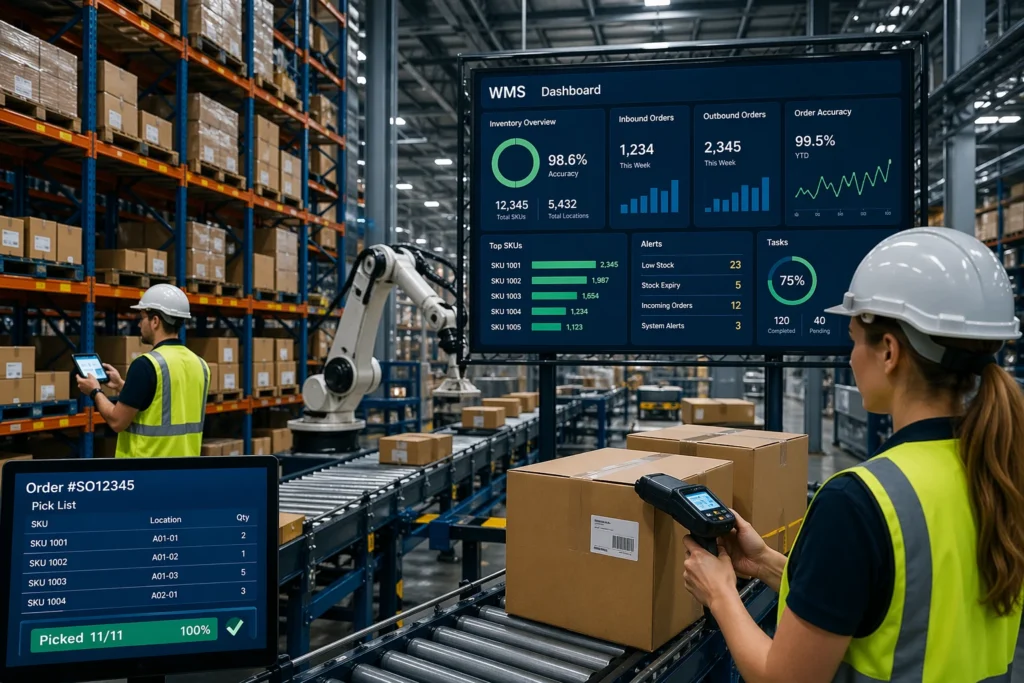
Warehouse operations have changed dramatically over the past decade, and the pressure to deliver faster, more accurately, and at lower cost has never been greater. Businesses that still rely on spreadsheets or manual logs often find themselves losing visibility into stock movement, order accuracy, and labor productivity. A Warehouse Management System (WMS) addresses these pain points by giving companies real-time control over every item that enters or leaves the warehouse floor.
Whether you run a small distribution center or a multi-site logistics network, adopting the right WMS can reshape how your supply chain performs. Before diving into features and benefits, it is important to understand how a warehouse management system works. This article explores what a WMS truly offers, why it matters, and how to choose the solution that fits your operation.
What Is a Warehouse Management System?
A Warehouse Management System is software designed to oversee and optimize daily warehouse activities, from receiving goods to shipping finished orders. It tracks inventory levels, manages storage locations, directs picking routes, and produces reports that help managers make faster decisions. Instead of guessing where products sit or how many remain on hand, teams gain immediate access to accurate data.
Modern WMS platforms also connect with other systems such as ERP, transportation management, and e-commerce storefronts. This connectivity creates one unified flow of information across the entire business. The result is fewer errors, less duplicated work, and a clearer picture of performance at every stage.
Why Do Warehouses Need a Dedicated Management System?
Manual processes may work when a business handles a small number of SKUs, but growth quickly exposes weaknesses. Lost pallets, miscounted stock, and delayed shipments become everyday frustrations that cost money and damage customer trust. A WMS solves these issues by automating repetitive tasks and giving staff clear digital instructions.
Beyond automation, a WMS brings accountability. Every transaction is logged with a user, timestamp, and location, which makes it easy to investigate discrepancies. Managers can then focus on improvement rather than firefighting.
Common Warehouse Challenges Solved by a WMS
- Inaccurate stock counts caused by manual entry: Barcode and RFID scans replace typos and missed updates, so system data matches shelf reality.
- Slow order fulfillment during peak seasons: Automated order grouping and route planning keep shipments moving even when volume spikes.
- Poor use of storage space and shelf capacity: The system assigns slots based on size, weight, and turnover to maximize cubic utilization.
- Difficulty tracking returns and damaged goods: Every return is logged with reason code and condition, giving a clean audit trail.
- Limited visibility for managers and stakeholders: Live dashboards show real-time KPIs, so decisions happen in minutes instead of days.
Core Features That Define a Strong WMS
Choosing the right WPS system requires understanding its core capabilities. Teams should explore modern WMS features such as real-time tracking, intelligent slotting, and carrier integration to see how far the technology has moved. Below are the features that most directly impact warehouse productivity and customer satisfaction.
- Real-Time Inventory Visibility
A WMS updates inventory data instantly using barcodes, RFID, or QR codes. This helps prevent stock shortages, reduce overstocking, and keep stock levels accurate. - Smart Putaway and Slotting
The system assigns storage locations based on product size, demand, and turnover. Fast-moving items are placed closer to packing areas to speed up operations. - Efficient Order Picking
A WMS improves picking by grouping orders and guiding workers through optimized routes. This reduces travel time and increases overall productivity. - Integrated Shipping Process
The system verifies orders, generates shipping labels, and supports carrier selection. This helps reduce errors and ensures smoother deliveries. - Actionable Reporting and Insights
A WMS provides reports on key metrics like order accuracy and labor performance. These insights support better planning and decision-making.
Benefits Businesses Can Expect After Implementation
The advantages of a WMS extend far beyond faster picking or cleaner shelves. Companies often report sharp improvements in several performance areas within the first year of use.
- Higher Inventory Accuracy
Switching to a WMS can increase inventory accuracy to over 99 percent. This reduces counting errors, prevents wrong shipments, and lowers the need for excess safety stock. - Greater Labor Productivity
Clear task management and optimized routes help workers complete more tasks in less time. Training also becomes simpler, while overtime is easier to control. - Improved Customer Experience
A WMS supports faster processing, fewer errors, and real-time tracking. This leads to more reliable deliveries and better customer satisfaction. - Scalable Growth
A WMS can adapt as businesses grow, whether adding new products or expanding to new locations. Cloud-based systems offer flexibility without requiring major operational changes.
Choosing the Right WMS for Your Business
Selecting a WMS begins with understanding your current processes, future goals, and budget boundaries. Start by mapping out daily workflows and identifying the biggest bottlenecks in receiving, storage, picking, or shipping. This audit will reveal which features deserve priority during vendor evaluation.
Cloud WMS options lower upfront costs and accelerate rollout, while on-premise solutions give full control to businesses with strict data policies. Both models continue to improve, so the choice should align with operational needs rather than tradition.
Conclusion
A Warehouse Management System brings together the core elements covered throughout this article: accurate inventory tracking, intelligent putaway, optimized picking, integrated shipping, and actionable analytics. Together, these capabilities solve the manual errors, slow fulfillment, and poor space utilization that weigh down growing warehouses. The outcome is a measurable lift in accuracy, labor productivity, customer satisfaction, and scalability.