Interview – How Hannover Fairs provides support for Selangor Techsphere Summit (STS) 2026
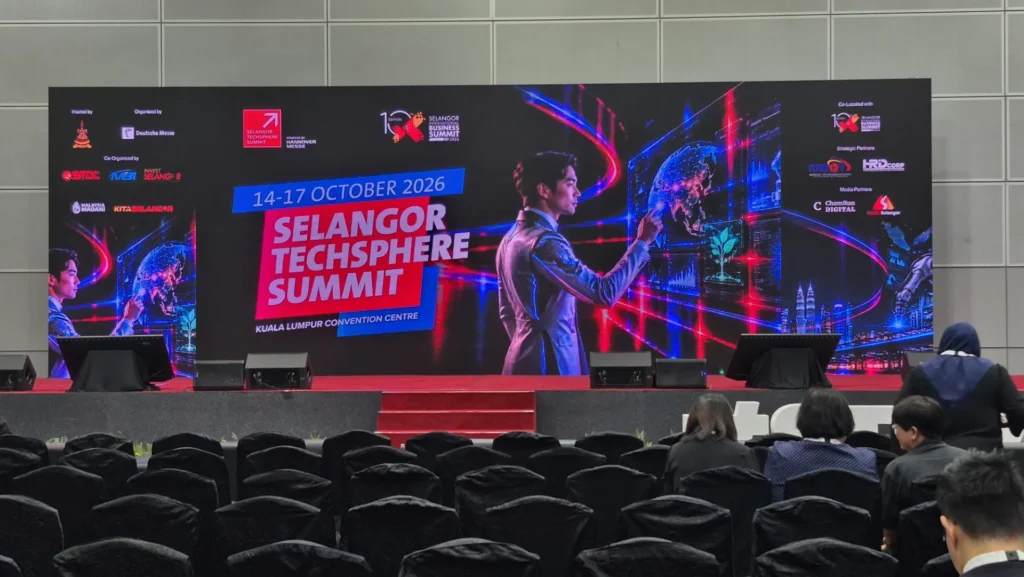
The Selangor Techsphere Summit (STS) 2026 is now underway, bringing together government representatives, international industry players and local technical talent to explore the next phase of Malaysia’s technological transformation. This year’s programme puts a stronger focus on areas such as industrial AI, green technology and human capital, reflecting the technologies and capabilities expected to shape the region’s future.
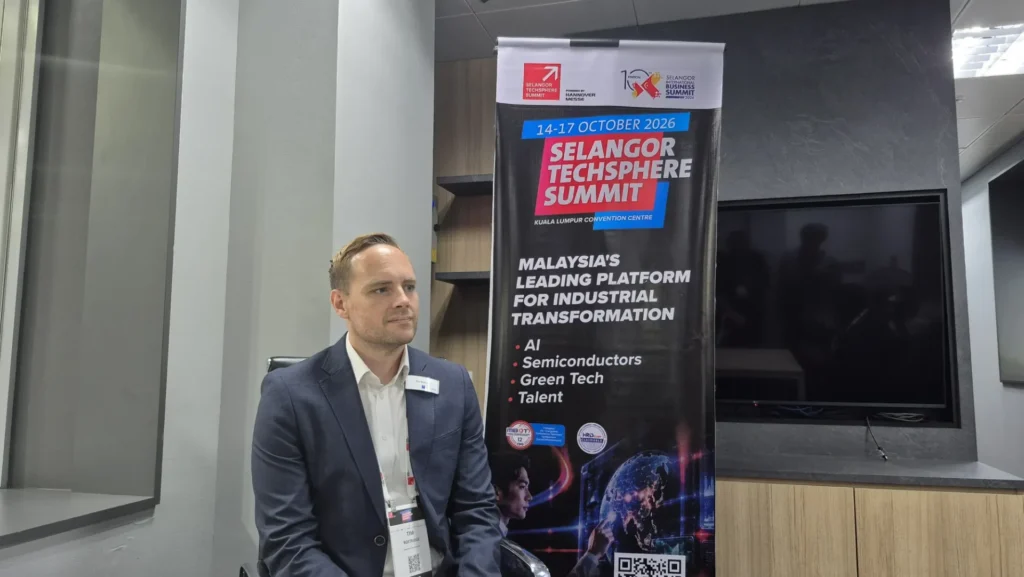
As part of our coverage, we spoke with Tim Bostridge, Managing Director of Hannover Fairs Asia Pacific, to get his perspective on the event, its growing international scope and some of the broader technology trends shaping industries in Malaysia and beyond.
Q: What are some of the key changes that set STS 2026 apart from previous editions?
Tim Bostridge: One of the biggest changes this year is that we’re part of the wider Selangor International Business Summit for the first time. That has allowed the programme to expand from two days last year to four days this year.
We’re also taking a more focused approach with each day centred around a specific theme, including industrial AI, green technology and human capital. This allows us to take a deeper look at the topics that will be important to the future growth of industry in Malaysia and Selangor.
Q: How would you describe the progress of the collaboration with SDPC compared with the previous edition?
Tim Bostridge: It has been a fantastic partnership. We work very closely with the SDPC team on everything from developing the programme to curating the display area and bringing the event together.
It’s really a case of two different partners working as one team to bring the event to life, and the collaboration has been very strong.
Q: For those who may not be familiar with Deutsche Messe, how does the organisation approach bringing an internationally established event concept into a local market?
Tim Bostridge: Deutsche Messe is a global event organiser, and we operate a number of events around the world. One of our biggest brands is Hannover Messe, the major industrial trade fair held every year in Hannover.
We tend to run events in strategic locations where industries are undergoing significant transformation. At the moment, I think Malaysia and Selangor are important parts of that change.
The idea is to take the themes and topics being discussed at a leading trade fair such as Hannover Messe in Germany and bring them into a local context. That gives us an opportunity to look at how these developments apply to local businesses and what companies here can do to improve their productivity.
Q: Could we eventually see similar technology-focused events being brought to other parts of Malaysia, such as Penang or Johor?
Tim Bostridge: We certainly welcome people from those states to come to Selangor for this event. We also run another programme in Singapore, which is obviously very close to Johor.
At this stage, I don’t necessarily see this particular event moving around. We’re very focused on Kuala Lumpur and Selangor. That said, there are other programmes that are relevant to companies in different parts of Malaysia, and we want businesses from across the country to be involved.
We try to make the event as all-encompassing as possible, whether that’s from a national, regional or international perspective. For the foreseeable future, though, I expect this particular event to remain in Selangor.
Q: From an international investor’s perspective, what are some of the factors that make a location attractive for technology investment? Are there areas that destinations need to continue improving?
Tim Bostridge: I wouldn’t want to comment too specifically on what individual markets need to improve. Around the world, countries are looking at how they can improve their policy settings and infrastructure to make their regions more attractive to businesses and investment.
The world is changing in ways that we haven’t seen over the past decade, and Malaysia is on a good path in terms of becoming a viable and interesting destination for international businesses. At the same time, the country is doing a good job of developing its own domestic businesses.
I think it’s important for Malaysia to continue along that path. Having strong domestic capabilities while maintaining a good position internationally will be critical going forward.
Q: AI is becoming increasingly important across the semiconductor industry. How do you see this affecting the sector and its future development?
Tim Bostridge: It’s a huge growth industry, not just globally but here in Malaysia as well.
I think AI is going to play a central role in processes across the board. That could range from relatively basic automation to genuine artificial intelligence, which is where the industry is increasingly heading.
The scale and economies of scale required are going to be significant, and we don’t necessarily have all the human capital needed to achieve that. Technology gives us an opportunity to get to where we need to be faster.
So I think AI is absolutely going to play a major role going forward.
Q: The rapid growth of AI has also contributed to higher demand and rising costs for memory and other electronic components. How do you think businesses will deal with these pressures?
Tim Bostridge: Inflation and rising costs, particularly in that area, are certainly going to be a challenge. Demand is only going to increase, and the companies involved are working to improve and expand their supply chains to manage those pressures.
The effects are being felt across practically every type of electronic device, with prices being pushed upwards as a result.
Ultimately, the market has a way of finding a balance between supply and demand. If costs continue to rise, perhaps we will need to slow down in certain areas, or companies will find new ways of developing the technologies they need to keep moving forward.
It’s difficult to say exactly how this will play out, but it will definitely be a factor.
Q: We’ve seen technologies such as the iPhone and, more recently, ChatGPT become products that changed how people think about technology. What do you think could be the next major technology or service that people aren’t necessarily anticipating today?
Tim Bostridge: That’s a big question.
From the perspective of Hannover Messe, some of the areas we’re increasingly focusing on include green technology and the generation of energy needed to power the future.
We’re also looking at data centre infrastructure and the capacity that will be required to support this future.
Another area we’re beginning to focus on in 2027 is space technology and the technologies that will be used in that industry in the future.
I think that’s particularly interesting because we perhaps don’t fully understand its potential just yet. Over the next few years, products will emerge that I think we’re not even imagining at the moment.
Q: One area that is becoming interesting is lower-power AI hardware designed for more specialised workloads. How would technologies like these fit into the scope of the next edition of the event?
Tim Bostridge: Ultimately, it’s really up to the businesses themselves to demonstrate how they are developing and positioning their products.
I’m not a technical person, so I don’t want to speak too deeply about areas where I’m not an authority. However, companies within the exhibition that are focusing on these technologies will certainly be showcasing them, and they’ll have people who can explain the technology in much more detail.