Taiwan showcases sovereign AI vision at Smart City Summit & Expo 2026
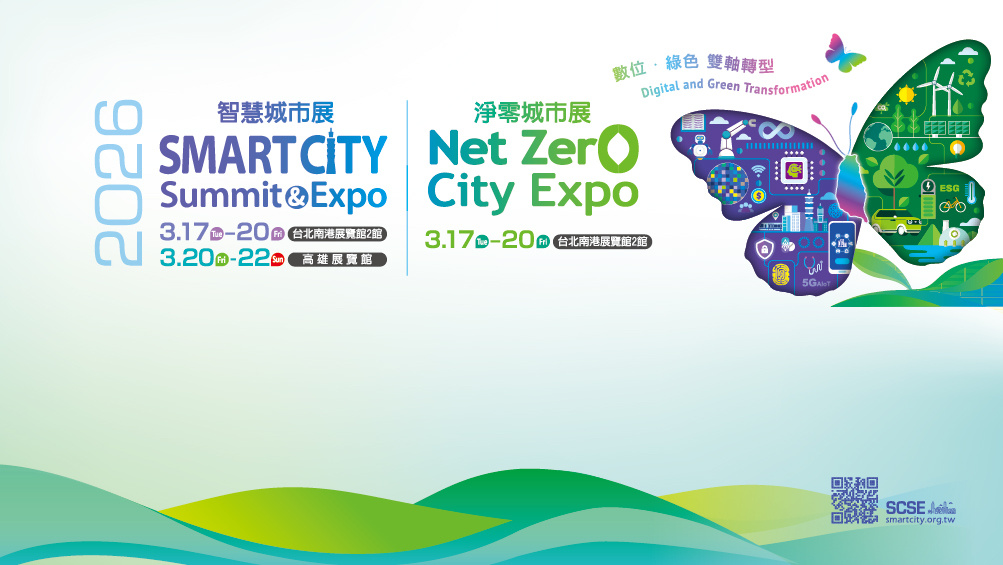
Taiwan is set to spotlight its next-generation smart city strategy as the 2026 Smart City Summit & Expo (SCSE) and Net Zero City Exhibition open on March 17 at the Taipei Nangang Exhibition Center. Led by ASUSTeK Computer Inc. and Foxconn together with more than 20 technology partners, the event will introduce the world’s first AI City Pavilion, combining AI computing infrastructure, operating platforms, and integrated smart city applications for international city leaders and system integrators.
The launch reflects Taiwan’s broader ambition to position itself as a global hub for urban AI innovation. Samson Hu, who also chairs the Taiwan Smart City Solutions Alliance, said Taiwan will continue aligning government, industry, and academia to refine AI City technologies and promote them internationally.
This year’s exhibition carries the theme “Digital and Green Transformation,” bringing together seven government ministries and 13 county and city governments to demonstrate how policy frameworks and digital infrastructure can work together to drive sustainable urban development. Organizers say the initiative highlights Taiwan’s ability to integrate public policy with advanced technology, creating a scalable smart city ecosystem aimed at global adoption.
At the center of the showcase is the AI City Pavilion, developed by ASUS, Foxconn, and the Taiwan Smart City Solutions Alliance. The pavilion presents what organizers describe as the world’s first full-scale sovereign AI system designed for cities, featuring nearly 60 solutions structured around a five-layer architecture covering computing infrastructure, AI models, platforms, applications, and innovation layers. Demonstrations highlight four key urban scenarios – transportation, healthcare, security, and city governance – with real-world examples drawn from deployments in Tainan and Kaohsiung.
The framework centers on the concept of “City Sovereign AI,” which integrates Taiwan’s capabilities in high-performance computing, AI development, ICT infrastructure, and systems integration to create a Smart City 4.0 platform. Delivered through an “AI City as a Service” model, the approach is designed to give municipal leaders and system integrators a structured pathway to deploy AI-driven urban systems while positioning Taiwan as a potential exporter of sovereign AI city solutions.
The pavilion will also highlight contributions from a wide network of partners, including AMD, Qualcomm, Innodisk, Askey, Ennoconn, Sharp Corporation, Trend Micro, and Gogolook, alongside research institutions such as National Tsing Hua University, demonstrating Taiwan’s full-stack AI ecosystem from hardware to software and services.
Beyond AI infrastructure, the exhibition will feature an AI Robotics Zone developed with the Smart Robotics Application SIG and the government of Tainan. The zone will present robotics solutions designed for real-world urban environments, including healthcare assistance, food service automation, logistics and warehouse operations, as well as inspection and disaster response technologies using service robots, autonomous mobile robots, and firefighting robots.
Energy resilience and sustainability also form a major pillar of the exhibition, with companies such as Delta Electronics, Chunghwa Telecom, Taiwan Mobile, Far EasTone Telecommunications, and Acer presenting technologies that integrate energy management, communications infrastructure, and climate resilience. Demonstrations will include AI-driven distributed energy systems, virtual power plants, digital twin platforms, and UAV-enabled monitoring for disaster response.
The event will also highlight emerging innovation through participation from more than 250 startups under a collaboration with the National Innovation & Entrepreneurship Association. The initiative links startups with industry alliances focused on semiconductor applications, smart mobility, digital city infrastructure, and healthcare technology, creating a platform that connects innovators with enterprises, municipal leaders, and investors.
With delegations from 53 countries and 174 cities expected to attend alongside more than 3,000 international business leaders, the 2026 SCSE underscores Taiwan’s growing influence in the global smart city ecosystem. Participating academic institutions include National Yang Ming Chiao Tung University, National Taipei University of Technology, National Sun Yat-sen University, National Taiwan Ocean University, National Tsing Hua University, and Feng Chia University.
New this year is CITY VISION IN ACTION, an international co-creation workshop where city representatives, technology vendors, and solution providers collaborate on real-world urban challenges. Organizers say the initiative is designed to accelerate the deployment of practical smart city technologies through cross-sector collaboration.
Taken together, the exhibition highlights a broader shift in how cities approach digital transformation – moving from simply adopting smart technologies to developing and operating their own AI-driven infrastructure. For Taiwan, the 2026 Smart City Summit & Expo represents a key milestone in advancing city-scale AI solutions for the global market.